Your Cart is Empty


The story of how Salumi Chicago began — a one-way ticket, four months of hand-tying culatello, and a craft I brought home to Back of the Yards.
By Greg Laketek, Founder of Salumi Chicago
I grew up spending summers with my grandparents in Le Marche, on the Adriatic coast of Italy. The food there was simple, clean, pure. Bread, cheese, salumi, tomatoes still warm from the sun. We ate at long tables. Nothing was rushed. Nothing was wrapped in plastic.
When I came home to the United States, I missed it. The cold cuts on American shelves were nothing like what I'd eaten as a boy. They were soft and salty and sweet in a way real cured meat shouldn't be. I didn't know yet that the difference was sugar, commercial cultures, and industrial fermentation — I just knew the food tasted wrong.
That feeling didn't go away.
Years later, after working in consulting and putting myself through culinary school in the evenings, I kept coming back to that food. To Marche. To my grandparents' table.
Salumi made sense as a thing to make. Chicago — a city built on its meatpacking history, where Upton Sinclair set The Jungle, where the Union Stockyards once supplied a fifth of the country's meat — felt like the right place to do it. But I knew I couldn't learn what I needed to learn here. There was no American Master Salumiere I could apprentice under. The knowledge was in Italy. It had always been in Italy.
So I did the thing you're not supposed to do.
I booked a one-way ticket to Milan.
I flew into Milan and went straight to Parma. Prosciutto is best known there, so that's where I needed to be. I had no contacts. No introductions. No real plan beyond find someone who will teach me.
For two weeks, I knocked on doors.
Every salumeria, every small producer, every shop I could find. I'd walk in, explain in broken Italian what I was trying to do, and watch them shake their heads. No, we don't take Americans. No, we don't teach. No, the masters are full.
But in every shop I walked into, I noticed the same poster on the wall. A photograph of a man. The name underneath: Massimo Spigaroli. Antica Corte Pallavicina.
I needed to meet this man.
I couldn't get a meeting with Massimo directly — too important, too booked, no chance of an American with no credentials getting his time. So I tried something else.
I called Antica Corte Pallavicina and booked a dinner reservation at the restaurant on the property. Then I asked if they would give me a tour of the culatello cave beforehand. They agreed.
When I arrived, they took me down beneath the castle into the cellars where their culatelli age. The air was cool and damp and smelled like centuries of cured meat. Hanging from the ceiling, each name-tagged, were the personal reserves of the people who eat at Antica Corte Pallavicina's table.
I saw the reserves of Alain Ducasse. Massimo Bottura. Heston Blumenthal. Carlo Cracco. The Prince of Monaco. The Royal Family in London.
I was twenty-something, jet-lagged, in over my head, looking at the personal salumi collection of the most important people in world gastronomy. And I knew this was the room I had to be in.
During the tour, I asked Michele — the host and director — if I could meet Massimo before my dinner. I told him I would work for free. I told him winter was the busy season at the salumificio, that this was when they needed hands, and that I had come all the way from the United States to ask.
He brought me upstairs to Massimo's quarters before service. We sat together at a small table. Michele translated.
I told Massimo my story. I told him about Le Marche, about consulting, about culinary school. I told him I was going to open the first salumificio in Illinois when I got home, and I wanted to learn the right way to do it. Not the American way. The Italian way.
Massimo listened. He was flying to see Alain Ducasse that weekend in Paris, he said. He would let me know on Monday.
That Monday, I had an email waiting for me. You start today.
I showed up that morning and got right in. The salumieri didn't speak English. I didn't speak much Italian. We figured it out anyway, the way people who work with their hands always figure it out.
They started me on the initial loop — the first knot in tying a salami. They gave me twine and had me tie it, over and over, for two full days. Once I had it down, they showed me the next step. Two weeks in, I was tying culatelli from start to finish.
We made about eighty culatelli a day. We stuffed several hundred pounds of salami by hand. We worked in rooms designed to mimic the seasons of the year — spring rooms, summer rooms, fall rooms, winter rooms — so the culatelli could move through the cycle naturally before descending into the cave to finish.
They showed me the farm: fifty thousand plants. Their own wine. Their own Parmigiano-Reggiano. Their own hogs and cattle. Everything we used in production came from that land. Everything except the salt, which came from the sea.
I spent four months at Antica Corte Pallavicina, across two trips in 2010. When one employee fell ill and another took paternity leave, I was put on the line for twelve-hour shifts. They fed me. They housed me at their relais — the small hotel on the property. By the time I was leaving for good, Massimo wasn't asking why I was there anymore.
When it came time to leave the second time, Massimo brought me into his shop. He told me to take whatever I could fit in my luggage as a thank you. And then he did something else.
He told me I could buy one of the year's Maiale Nero culatelli.
Antica Corte Pallavicina only produces 100 Maiale Nero culatelli per year. Twenty of them are made available for outside purchase. The other eighty go to allocated clients and are consumed in the restaurant. The gift wasn't the culatello itself — I paid for it. The gift was being allowed to buy one at all. To be counted among the people Massimo would sell one to.
I packed it in my luggage and flew home.
I opened West Loop Salumi in 2012 — one of the first salumifici in Illinois. We outgrew the space within a few years and moved south in 2018 to Back of the Yards, the historic heart of Chicago's meatpacking district. Within walking distance of where the Union Stockyards once stood. Where Sinclair wrote his book. Where my grandparents would have understood exactly what I was doing.
Today the company is called Salumi Chicago.
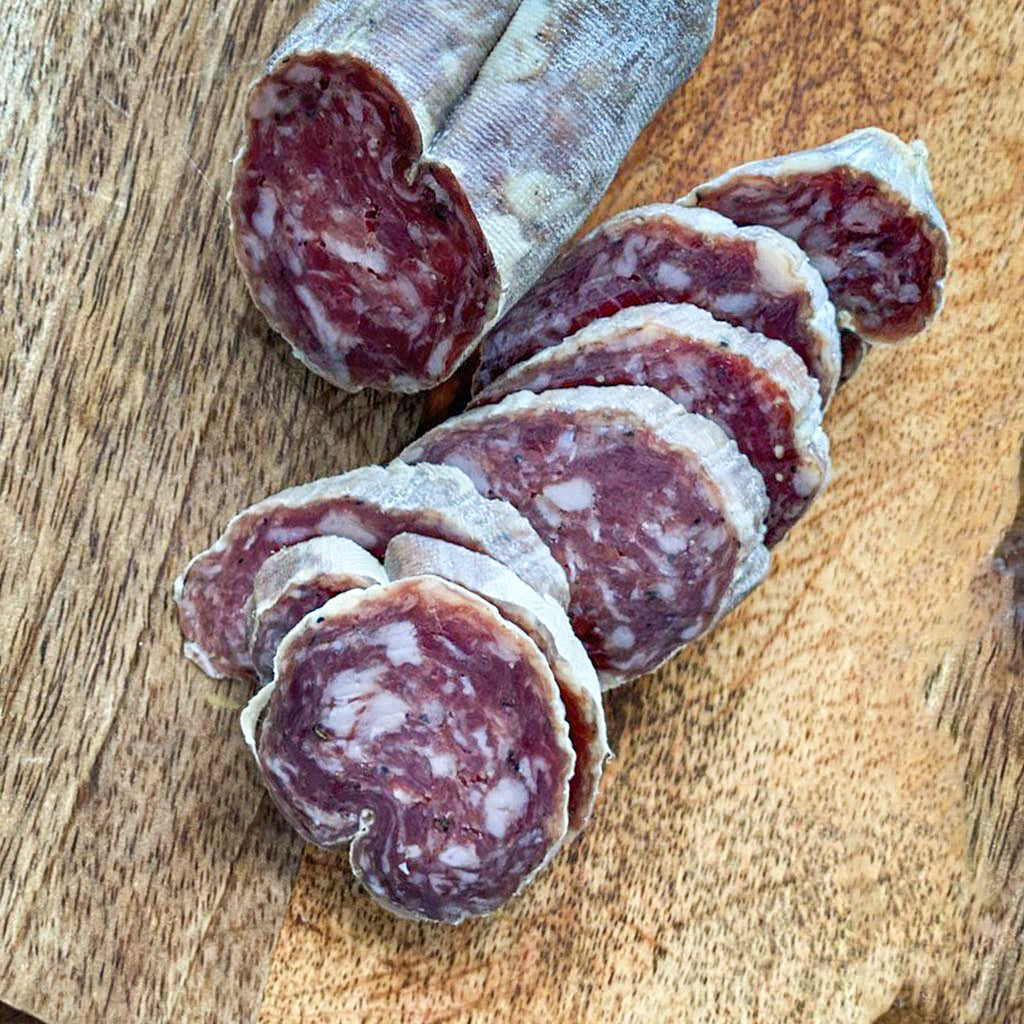
Every salami we make in Back of the Yards traces back to that cave under the castle. Most of our product is still hand-tied — the way they taught me. Our curing rooms are bloomed with the same molds I worked with in Parma. We use sea salt. No cane sugar. No dextrose.
Where most American producers add sugar and commercial starter cultures to push fermentation along, we ferment slowly, at low temperatures, the way it's been done in Italy for centuries. The grape must in Lambrusco does the work. It takes longer. It costs more. It produces a clean, complex flavor that doesn't taste like anything else on the American market.
That's the inheritance. That's what's on every board.
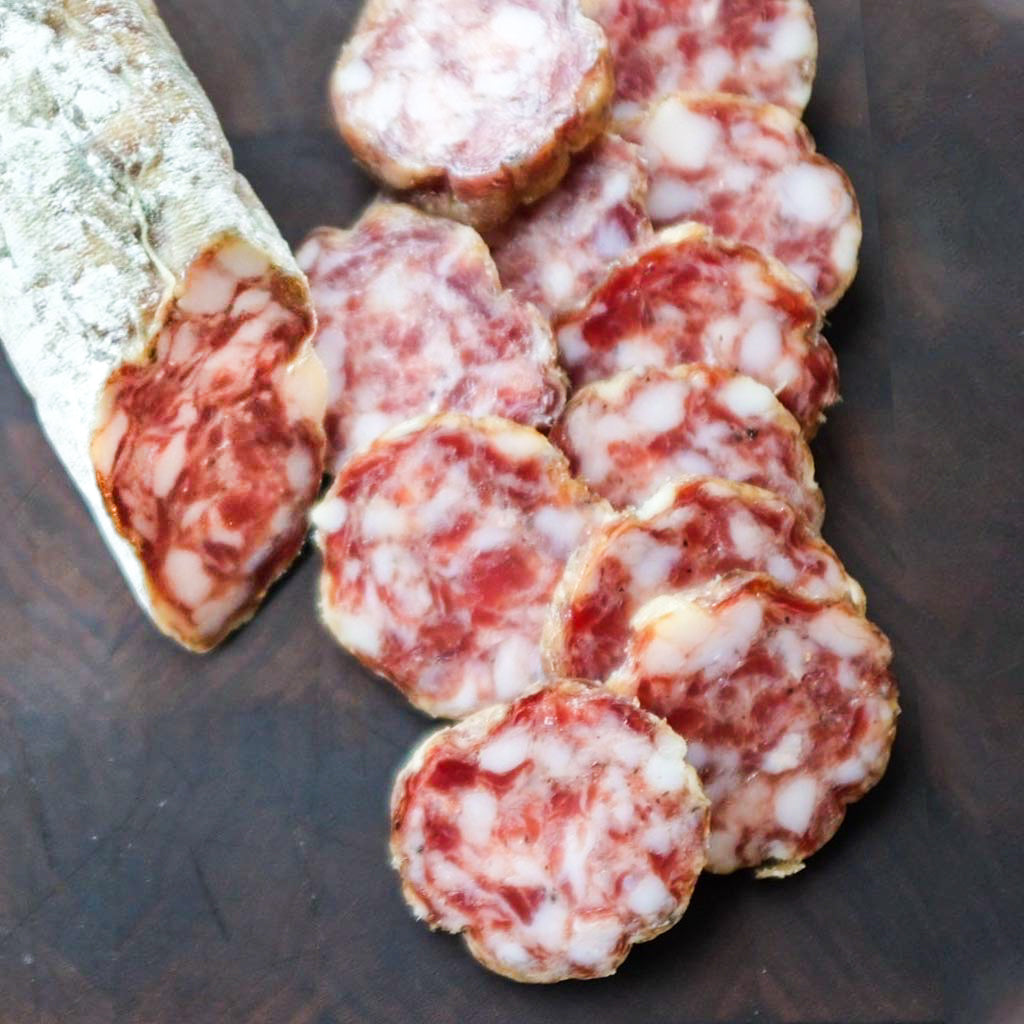
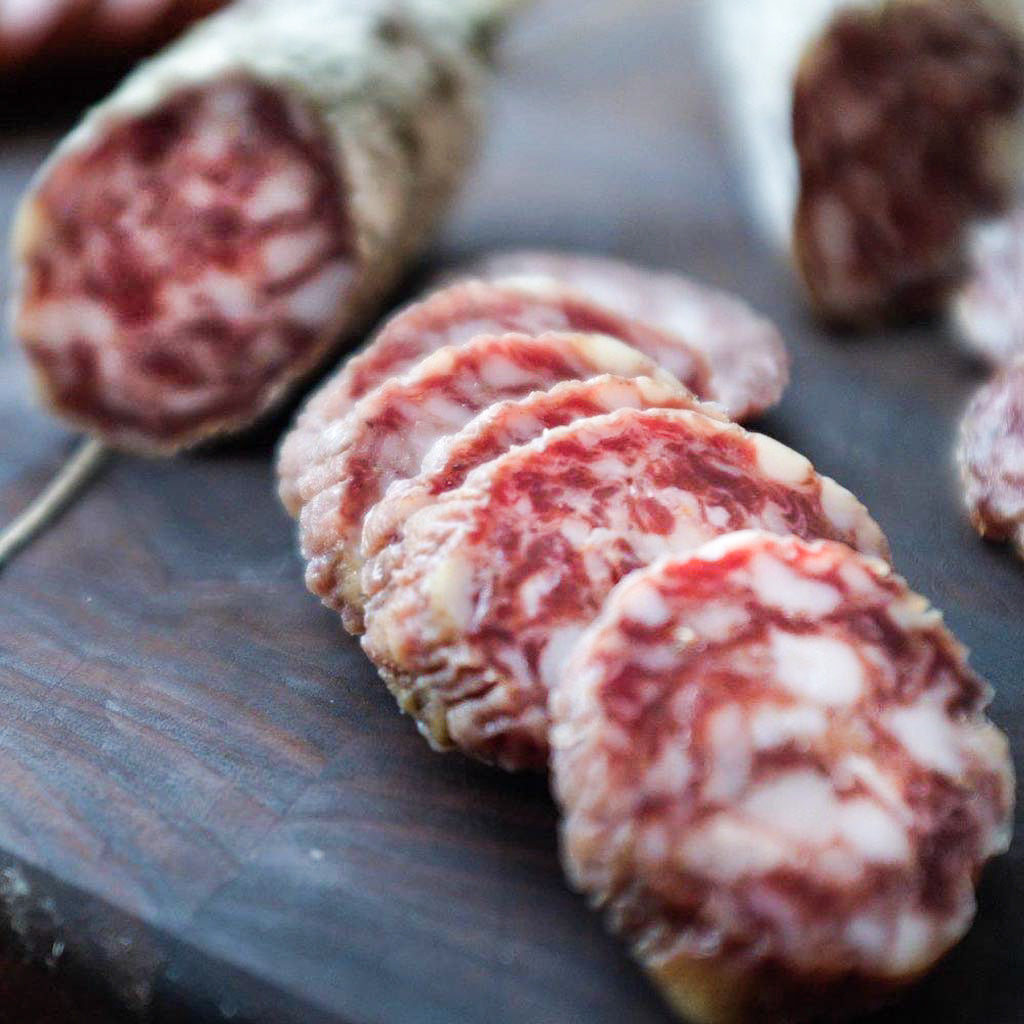
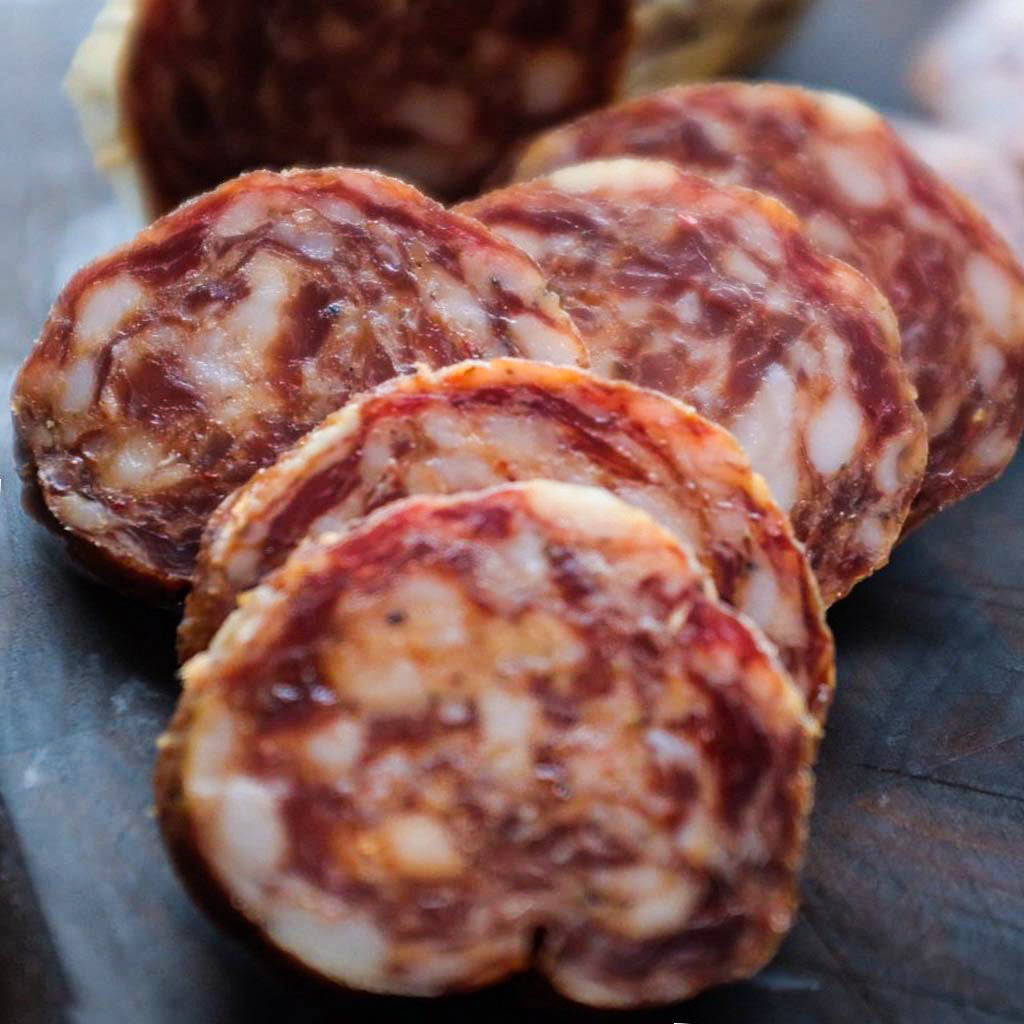
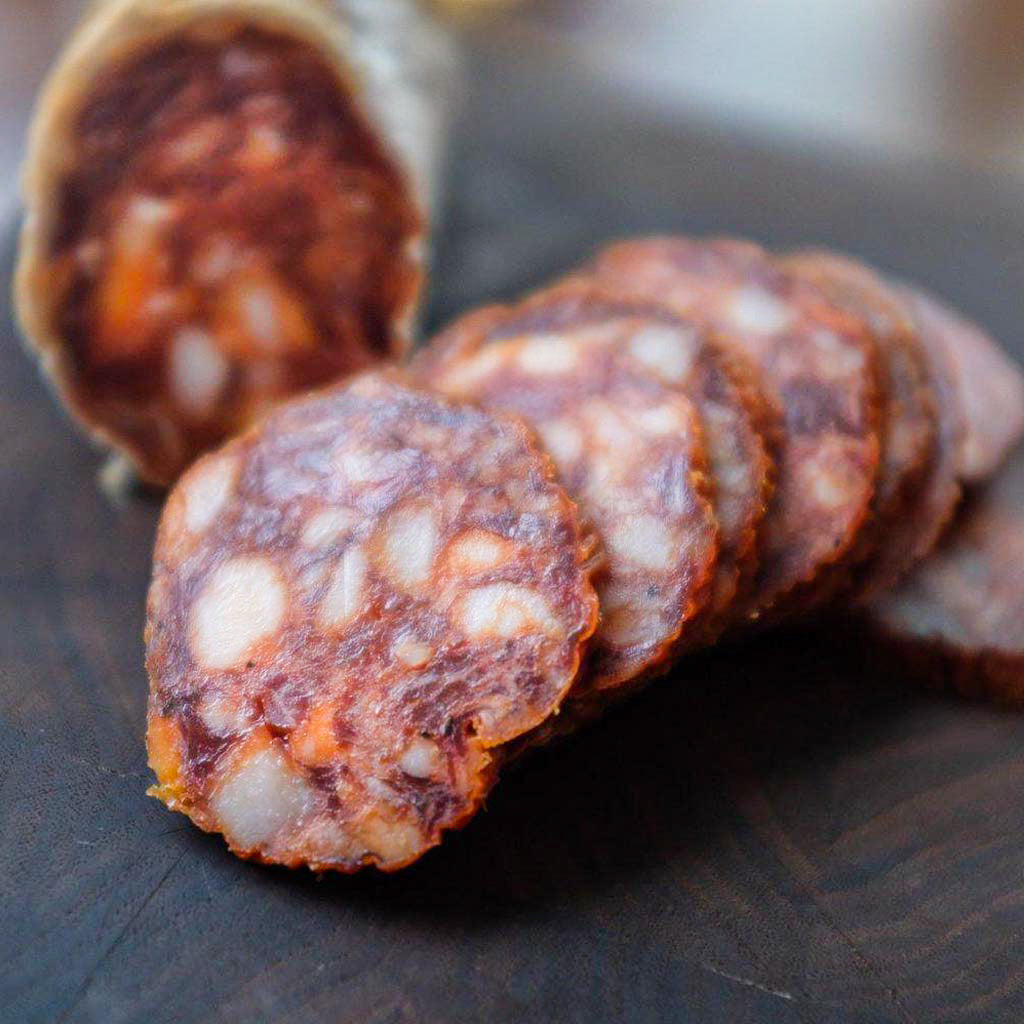
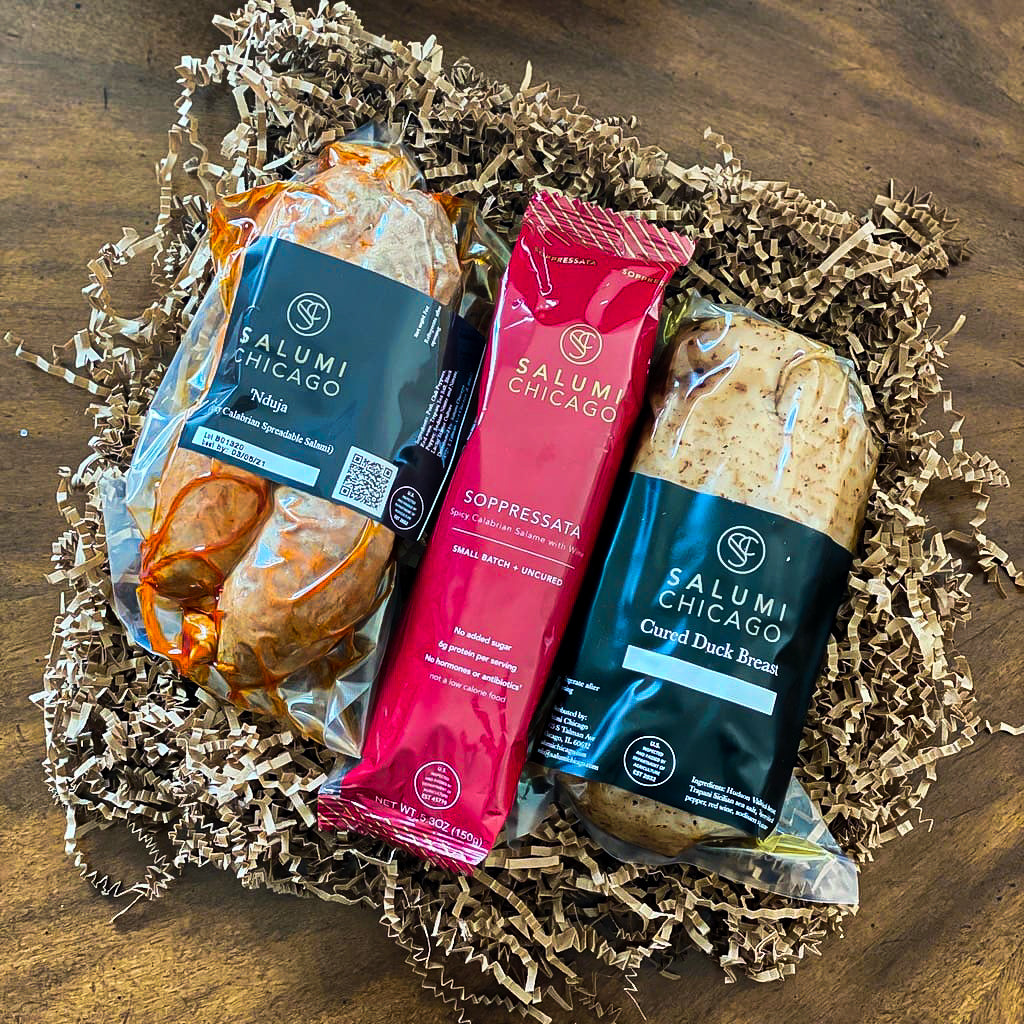
This Father's Day, give him something made the same way Massimo taught me. Four products — Tartufo, 'Nduja, Soppressata, Finocchiona — boxed and shipped from Back of the Yards.
Shop the Father's Day Gift Box →
Greg Laketek is the founder of Salumi Chicago. He trained at Antica Corte Pallavicina near Parma, Italy in 2010, opened West Loop Salumi in 2012, and relocated the company to the historic Back of the Yards neighborhood of Chicago in 2018. Salumi Chicago has been featured in Food & Wine and named to lists at Forbes and Charcuterie Masters. The company is based in Chicago, Illinois.